
Contact Us
- A.Yeung@leadmenspacking.com
- +8618933322747
- Building 4, No. 223, Guangcheng Road, Jiuzhouji, Xiaolan Town, Zhongshan City, Guangdong Province
How to Determine If Sealing Film Seal Integrity Meets Standards?
Sealing film being sealed doesn't mean it's actually sealed. A flat appearance with no bubbles doesn't guarantee qualified seal integrity either. Determining whether the seal meets standards can't rely on the naked eye — it requires testing.
The most direct method: dye penetration test
Invert the sealed bottle and apply a colored penetrant (such as methylene blue solution) to the edge of the sealing film. Let it sit for a few minutes and observe. If color penetration appears inside the bottle, it indicates micro-pores or channels at the seal, meaning the seal is not qualified. This method is simple, intuitive, and suitable for production line sampling.
A more precise method: vacuum decay test
Place the sealed container into a vacuum test chamber and monitor pressure changes after evacuation. If the pressure continues to rise within a set time, it indicates gas is entering through the seal, meaning seal integrity is substandard. This method offers high sensitivity and can detect micro-leaks invisible to the naked eye — suitable for products with high sealing requirements.
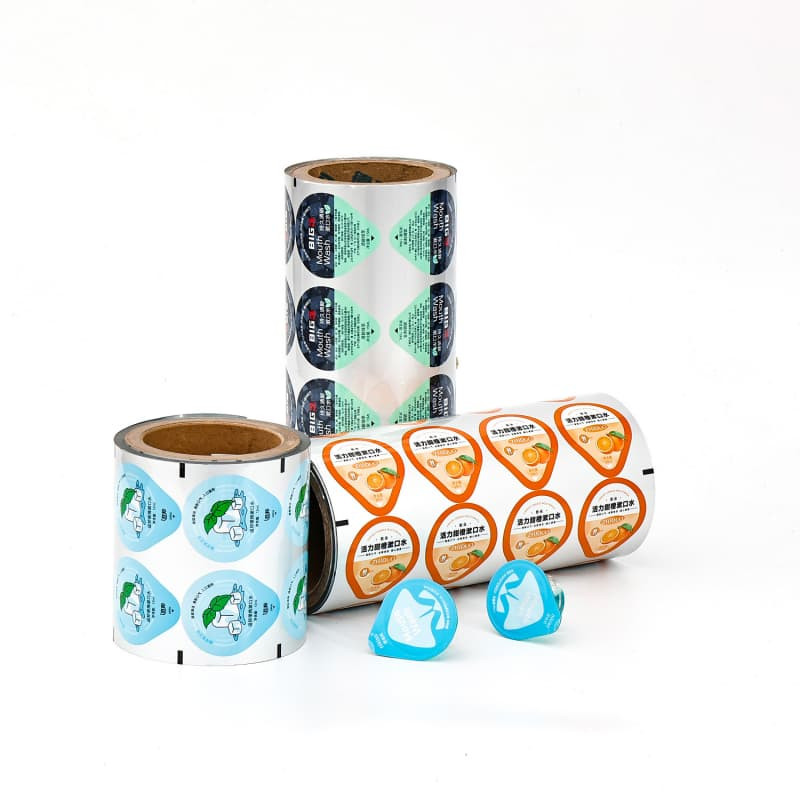
Microbial challenge test: for products with sterility requirements
For sterile packaging such as pharmaceuticals and medical devices, a microbial challenge test can be conducted. Immerse the sealed container in a high-concentration bacterial suspension, and after a certain period, test whether microorganisms have penetrated into the container. If not, the seal barrier is effective.
Peel force test: auxiliary assessment
Seal integrity isn't just about "whether it seals" — it's also about "whether it tears open." Use a tensile tester to measure peel force. If the values fall within the specified range with minimal fluctuation, it indicates the heat-sealing process is stable and seal consistency is assured.
Testing under simulated actual conditions
The above tests are best conducted under simulated storage and transport conditions — high temperature, low temperature, humidity cycling — before testing, to reflect true performance.
Leadtra Packaging recommends that customers complete seal integrity verification during the sampling stage and conduct regular sampling inspections during mass production. If you have questions about testing methods or acceptance criteria, we can assist in analyzing samples and help confirm whether your sealing film truly meets standards.
“Recommend”
【editor】:Leadtra PackagingCopyright:https://www.leadmenspacking.comReproduced please indicate the source