
Contact Us
- A.Yeung@leadmenspacking.com
- +8618933322747
- Building 4, No. 223, Guangcheng Road, Jiuzhouji, Xiaolan Town, Zhongshan City, Guangdong Province
How to Choose Between Foam Gaskets and Aluminum Foil Gaskets?
Many customers ask during selection: What's the difference between foam gaskets and aluminum foil gaskets? Which one is right for my product? The two have distinct differences in structure, sealing principle, and application scenarios. Choosing correctly ensures both sealing effectiveness and cost control.
1. Structural Differences: Single-Layer Cushion vs. Composite Assembly
Foam gaskets (such as PE foam gaskets, PS foam gaskets) are made of a single foam material, typically white or off-white in color. They are soft and elastic, relying on physical compression when the cap is tightened to achieve sealing.
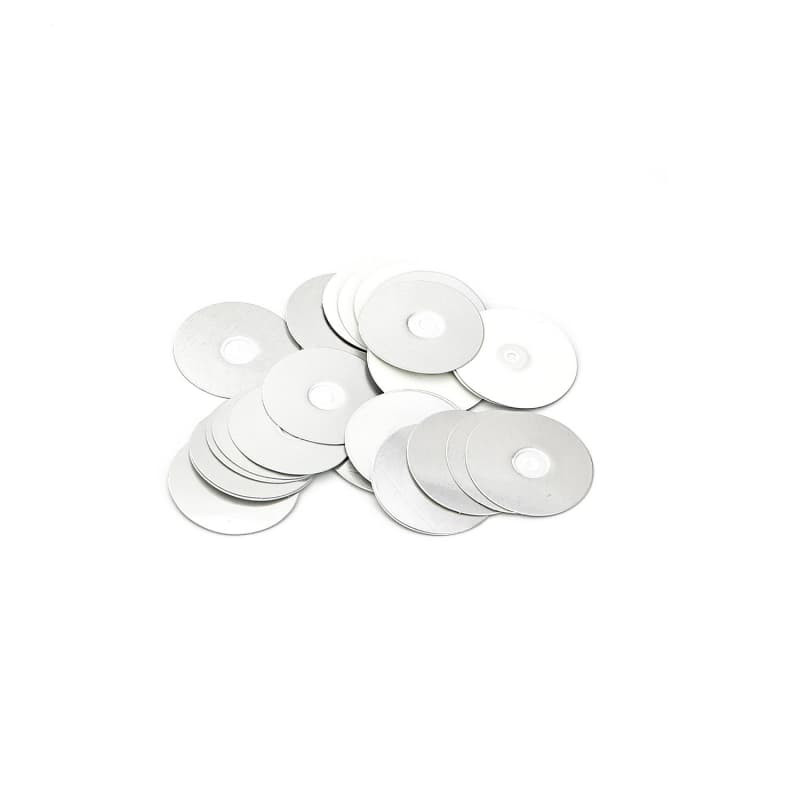
Aluminum foil gaskets are a multi-layer composite structure: the top layer is paperboard or foam, the middle is aluminum foil, and the bottom is a heat-seal layer. Through electromagnetic induction heating, the aluminum foil generates heat, fusing the heat-seal layer with the bottle mouth to form a permanent seal.
2. Sealing Principle Differences: Physical Compression vs. Induction Fusion
Foam gaskets provide "physical sealing." The gasket is placed inside the bottle cap, and when the cap is tightened, the gasket is compressed, filling the gap between the bottle mouth and the cap to achieve a seal. This seal is reversible — opening the cap releases the seal, and retightening re-establishes it, making it suitable for products that require repeated opening and closing.
Aluminum foil gaskets provide "chemical sealing." During sealing, the aluminum foil fuses with the bottle mouth, forming an irreversible seal. Once torn open, the seal is permanently broken and cannot be restored. This type of seal offers excellent tamper-evident and anti-counterfeit properties, allowing consumers to see at first opening whether the product has been previously opened.
3. Application Scenarios: Choose Based on Product and Process Needs
Choose foam gaskets for:
Products that need to be opened and resealed repeatedly (such as cream cosmetics, food sauces)
Production lines without electromagnetic induction equipment, or where simpler sealing processes are preferred
Cost-sensitive applications — foam gaskets have a simpler process and lower cost
Typical applications: face cream jars, body lotion jars, cream-type cosmetics, food bottle cap liners
Choose aluminum foil gaskets for:
Products requiring tamper-evident, one-time sealing
Products requiring high barrier properties to prevent oxidation, moisture absorption, or evaporation
Production lines equipped with electromagnetic induction sealing machines for high-efficiency automated sealing
Typical applications: milk powder cans, seasoning bottles, supplement bottles, pharmaceutical packaging, liquor, oils
4. Special Selection Options
Breathable gaskets: If your product experiences swelling or collapsing during transport due to temperature or pressure changes (e.g., daily chemicals), foam breathable gaskets or aluminum foil breathable gaskets can balance internal and external pressure through a breathable membrane while preventing liquid leakage.
Pressure-sensitive gaskets: If you don't want to add electromagnetic induction equipment but still need a certain level of sealing, pressure-sensitive gaskets are a compromise option — no equipment required, sealing achieved directly through pressure.
5. Comparison Summary Table
Leadtra Packaging offers both foam gasket and aluminum foil gasket series. Based on your product characteristics, production line conditions, and budget, we can recommend the most suitable solution. If you have any questions, feel free to contact us.
“Recommend”
【editor】:Leadtra PackagingCopyright:https://www.leadmenspacking.comReproduced please indicate the source