
Contact Us
- A.Yeung@leadmenspacking.com
- +8618933322747
- Building 4, No. 223, Guangcheng Road, Jiuzhouji, Xiaolan Town, Zhongshan City, Guangdong Province
What Safety Tests Are Required for Cosmetic Sealing Film?
As a packaging material that comes into direct contact with the contents, the safety of cosmetic sealing film directly affects product quality and consumer health. Based on regulatory requirements and industry practices, Leadtra Packaging outlines the key safety testing items that sealing film must undergo.
1. Hygiene and Safety Testing: Preventing Harmful Substance Migration
Sealing film that contacts cosmetics directly must ensure it does not release harmful substances into the product.
Overall migration: Simulates cosmetic usage conditions to test the total amount of non-volatile substances that may migrate from the sealing film into the contents. This is a core indicator of packaging material safety.
Heavy metals and harmful elements: Tests for excessive levels of lead, arsenic, mercury, cadmium, chromium, nickel, and other elements. If these substances migrate into cosmetics, they pose potential health risks.
Residual solvents: If organic solvents used in printing or lamination processes do not fully evaporate, residues may contaminate the contents. Gas chromatography is used to detect residual solvents such as benzenes, esters, and ketones.
Plasticizers and specific additives: Additives such as phthalate plasticizers and antioxidants must be controlled within specified limits.
2. Microbial Barrier Testing: Preventing Secondary Contamination
Sealing film must not only seal but also provide a barrier against microorganisms.
Microbial challenge test: Inoculates indicator microorganisms such as Bacillus subtilis to verify whether the sealing film can effectively prevent microbial ingress. This is particularly important for cosmetics with weaker preservative systems (e.g., products claiming "preservative-free").
Package integrity testing: Uses vacuum decay or dye penetration methods to detect pinholes or leak channels at the seal, ensuring an effective barrier.
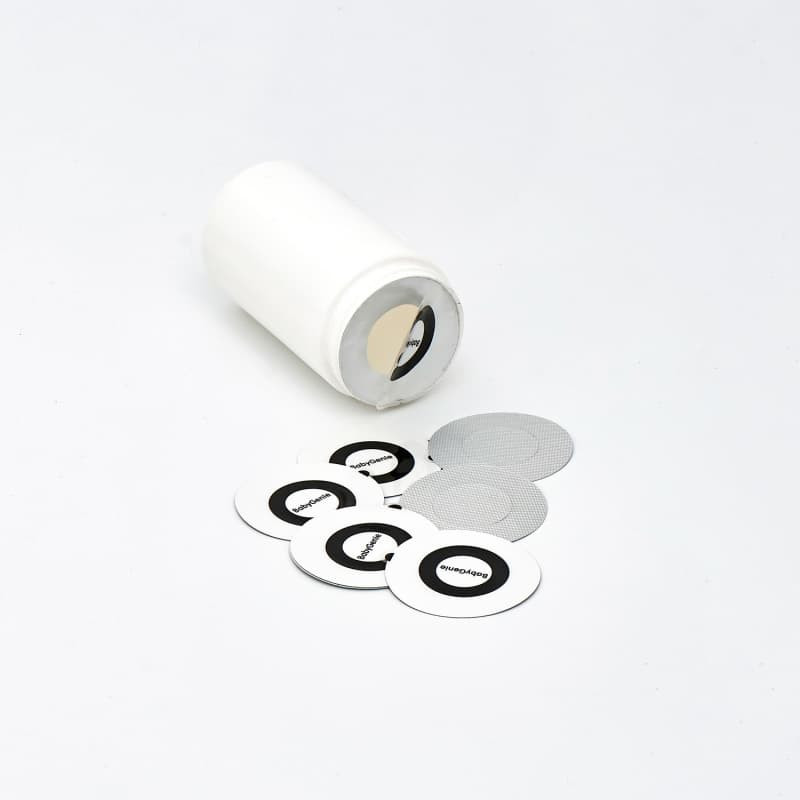
3. Physical and Mechanical Performance Testing: Ensuring Seal Reliability
The physical properties of sealing film directly affect sealing effectiveness and user experience.
Heat seal strength: Measures the bond strength of the heat-seal layer at the seal, ensuring it does not crack open during transport or use.
Peel force: For easy-tear sealing film, peel force must be controlled within the range of 3-8N/15mm, balancing seal integrity with smooth opening.
Seal integrity test: Uses vacuum or positive pressure methods to check whether the sealing film remains intact under pressure.
Puncture resistance and impact resistance: Simulates crushing and dropping during logistics to evaluate the film's resistance to damage.
Thickness uniformity: Ensures consistent film thickness, avoiding locally thin areas that could compromise the seal.
4. Chemical Resistance and Compatibility Testing
Cosmetics have complex formulations (e.g., containing alcohol, acids, essential oils), so the sealing film must have corresponding chemical stability.
Compatibility test: Contacts the sealing film with the cosmetic under accelerated aging conditions to observe abnormalities such as swelling, discoloration, delamination, and to detect migrated substances.
Chemical resistance test: Immerses the sealing film in simulant liquids or actual cosmetics to evaluate its tolerance.
5. Sensory Testing
Odor evaluation: Checks whether the sealing film has any off-odor, ensuring it does not interfere with the product's fragrance.
Visual inspection: Detects surface defects such as bubbles, impurities, or blurred printing on the sealing film.
Conclusion
Safety testing for cosmetic sealing film covers multiple dimensions including hygiene and safety, microbial barrier, physical performance, chemical resistance, and sensory evaluation. Leadtra Packaging strictly implements the testing standards described above, ensuring that every batch of sealing film meets the safety requirements for cosmetic packaging. For specific test reports or customized solutions, please feel free to contact the Leadtra Packaging technical team.
“Recommend”
【editor】:Leadtra PackagingCopyright:https://www.leadmenspacking.comReproduced please indicate the source