
Contact Us
- A.Yeung@leadmenspacking.com
- +8618933322747
- Building 4, No. 223, Guangcheng Road, Jiuzhouji, Xiaolan Town, Zhongshan City, Guangdong Province
How to Inspect Sealing Film Upon Arrival?
When sealing film arrives, many people to send it straight to the production line, assuming everything is fine once the supplier ships it. But Leadtra Packaging has seen too many cases where problems arise in that gap between "arrival" and "machine."
Don't rush to unpack and load it. Spend twenty minutes doing a few things first.
Check the boxes first. Any damage, water stains, or crushing on the outer packaging? Sealing film is sensitive to moisture — if the boxes are already soft and wrinkled, the film inside has likely been affected too. Then check the label information — product name, specifications, quantity, batch number — against the order. This takes two minutes but can prevent a lot of trouble later.
Pull a few pieces and measure. Use calipers to measure the film's diameter and thickness — thickness tolerance should be kept within ±3μm. For roll film, confirm the inner diameter and width match the order. For custom-printed versions, compare against the design proof to check for obvious deviations in print content, color, or position. No need to check everything — a few samples are enough. The key is whether there's a systematic deviation.
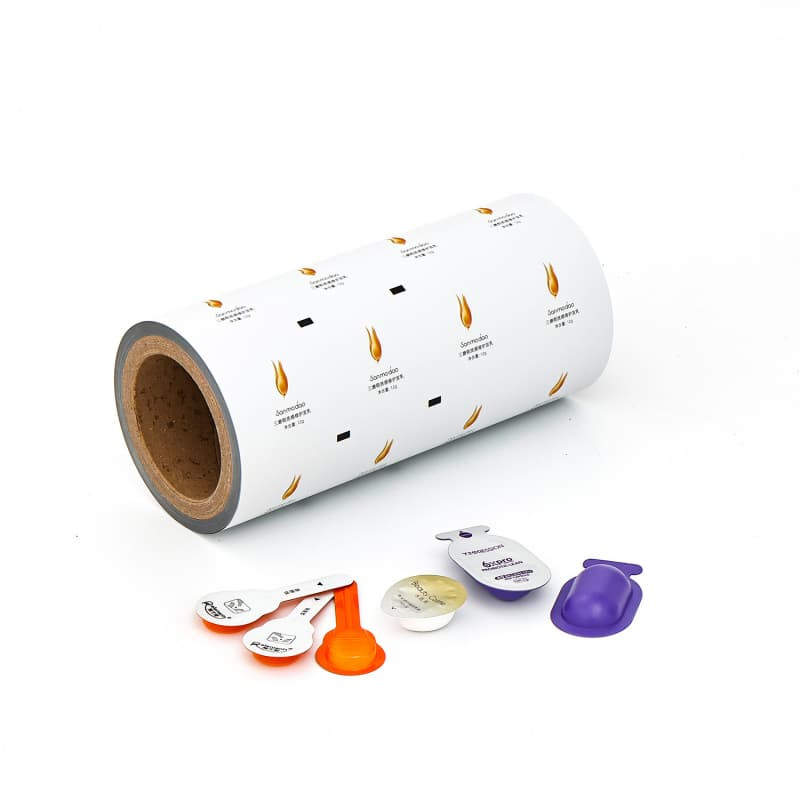
Then check the appearance. In a well-lit area, spread the film out and look for bubbles, scratches, wrinkles, or impurities. Hold a few pieces up to the light to check for visible pinholes in the aluminum foil layer. If there's a problem, take photos on the spot — don't wait until it's on the machine to trace back the cause. By then, it's hard to argue your case.
But the real inspection is "using" it. Take a few bottle mouth samples and seal them on your production line using normal parameters. Tear them open to check if the peel force is smooth and whether there's any adhesive residue. Invert them to see if they leak. If it's a product requiring high-temperature retort, run a simulated retort test as well. Once this step passes, the batch is truly qualified.
Finally, retain samples. Keep a few pieces from each batch, labeled with the batch number and arrival date, for future reference. If quality issues arise later, having retained samples allows for traceability.
Spending twenty extra minutes on incoming inspection can save two hours of downtime on the production line. If you find any abnormalities during inspection, or if you're unsure whether a certain specification meets standards, you can contact Leadtra Packaging directly. We can help analyze samples, verify test reports, and confirm whether this batch of film is ready for your machine.
“Recommend”
【editor】:Leadtra PackagingCopyright:https://www.leadmenspacking.comReproduced please indicate the source