
Contact Us
- A.Yeung@leadmenspacking.com
- +8618933322747
- Building 4, No. 223, Guangcheng Road, Jiuzhouji, Xiaolan Town, Zhongshan City, Guangdong Province
How to Solve Sealing Film Detachment in High-Temperature Environments?
Sealing film detachment in high-temperature environments is a common headache for many users during summer or hot-fill production. Film warping or peeling not only affects product appearance but can also lead to leakage, spoilage, and other quality risks. Based on years of service experience, Leadtra Packaging helps you understand the causes and solutions for heat-induced detachment.
Where Does the Problem Come From?
Sealing film detachment at high temperatures essentially means that the bonding strength between the heat-seal layer and the bottle mouth is weakened or destroyed in hot conditions. The specific causes can come from multiple areas.
Equipment parameters are the most common culprit — insufficient sealing power or too short heating time, preventing the heat-seal layer from fully melting and fusing with the bottle mouth. However, overheating is equally problematic: excessively high temperatures can carbonize the heat-seal adhesive, causing it to lose adhesion and become brittle, leading to detachment.
Container issues — mismatched bottle mouth materials are a hidden risk. Heat-seal adhesives have different formulations for different materials (PE, PP, PET, glass, etc.). Using the wrong type can cause adhesion failure at high temperatures. Additionally, oil, moisture, or dust on the bottle mouth surface create an isolation layer during sealing, and at high temperatures, these contaminants tend to soften and expand, increasing the risk of detachment.
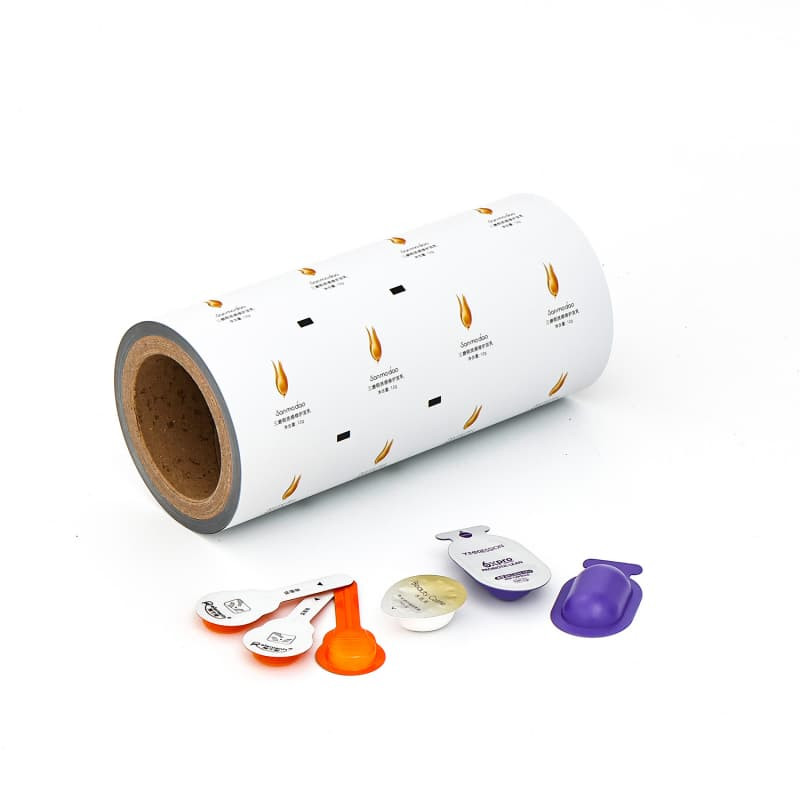
Sealing film quality is also critical. If the aluminum foil layer is too thin, the heat-seal layer's melting point is too low, or the lamination strength is unstable, the seal layer may separate from the bottle mouth at high temperatures. Some low-end films also warp in hot environments, accelerating detachment.
How to Solve It? Follow These Steps in Order
Step 1: Adjust sealing parameters. Start by slightly increasing sealing power or extending heating time, while ensuring uniform sealing pressure. If the power is too high, causing the aluminum foil to turn black or the adhesive layer to burn, reduce it accordingly. The key is finding the balance between "insufficient heating" and "overheating."
Step 2: Check bottle mouth cleanliness. Ensure the bottle mouth is clean, dry, and contaminant-free before sealing. Wipe with a lint-free cloth or add a blowing station before sealing to eliminate contamination interference.
Step 3: Verify film-to-bottle material compatibility. Different container materials require different heat-seal adhesive formulations. If detachment persists at high temperatures, provide bottle samples to your supplier to confirm whether the current film is designed for that material.
Step 4: Test the film's heat resistance. Try a different batch or a brand with proven performance to quickly determine whether the issue lies in machine parameters or the film consumable itself.
Step 5: Check equipment hardware. If adjustments don't work, the issue could be aging induction coils, capacitor degradation, or excessive distance between the coil and bottle mouth, reducing actual output power. Contact the equipment manufacturer for inspection.
Final Thoughts
High-temperature detachment is not an "unsolvable problem." It is often a mismatch between equipment parameters, bottle mouth condition, and film selection. By systematically checking power → bottle mouth → film → hardware, most issues can be resolved.
If you're repeatedly encountering high-temperature detachment, feel free to contact Leadtra Packaging. We can recommend heat-resistant solutions tailored to your bottle material, product characteristics, and production environment — reducing sealing problems caused by heat from the source. A good seal stands up to both heat and cold.
“Recommend”
【editor】:Leadtra PackagingCopyright:https://www.leadmenspacking.comReproduced please indicate the source