
Contact Us
- A.Yeung@leadmenspacking.com
- +8618933322747
- Building 4, No. 223, Guangcheng Road, Jiuzhouji, Xiaolan Town, Zhongshan City, Guangdong Province
What’s the difference between 0.02mm and 0.05mm sealing film thickness?
When customizing or purchasing sealing film, thickness is an unavoidable parameter. Faced with two common specifications — 0.02mm and 0.05mm — many people ask: what difference does such a small margin really make? How should you choose? Today, Leadtra Packaging will help clarify this.
1. What’s the difference between 0.02mm and 0.05mm?
Numerically, 0.05mm is more than twice as thick as 0.02mm. In terms of performance, the differences mainly lie in three aspects:
Barrier Properties: The core function of aluminum foil sealing film is to block oxygen and moisture. The 0.05mm aluminum foil layer is thicker, has a lower risk of pinholes, and offers more stable barrier performance. It is suitable for products requiring long-term freshness or a longer shelf life. The 0.02mm film offers adequate barrier properties, but the thinner aluminum layer means a higher chance of tiny pinholes during processing or transport.
Mechanical Strength: The 0.05mm film has stronger puncture and tensile resistance. If the packaged product has hard edges (such as bones, hard candies, etc.), or if there is stacking or squeezing during transport, the thicker film is less likely to be damaged. The 0.02mm film has moderate strength, suitable for conventional products, but carries a higher risk when encountering sharp objects.
Sealing Effect: Thickness also affects the heat seal strength of induction sealing. The 0.05mm aluminum layer is thicker, requiring slightly higher power or a little more time during sealing, but the result is a stronger seal. The 0.02mm film seals faster, making it suitable for high-speed production lines, though it requires higher flatness and cleanliness of the bottle mouth.
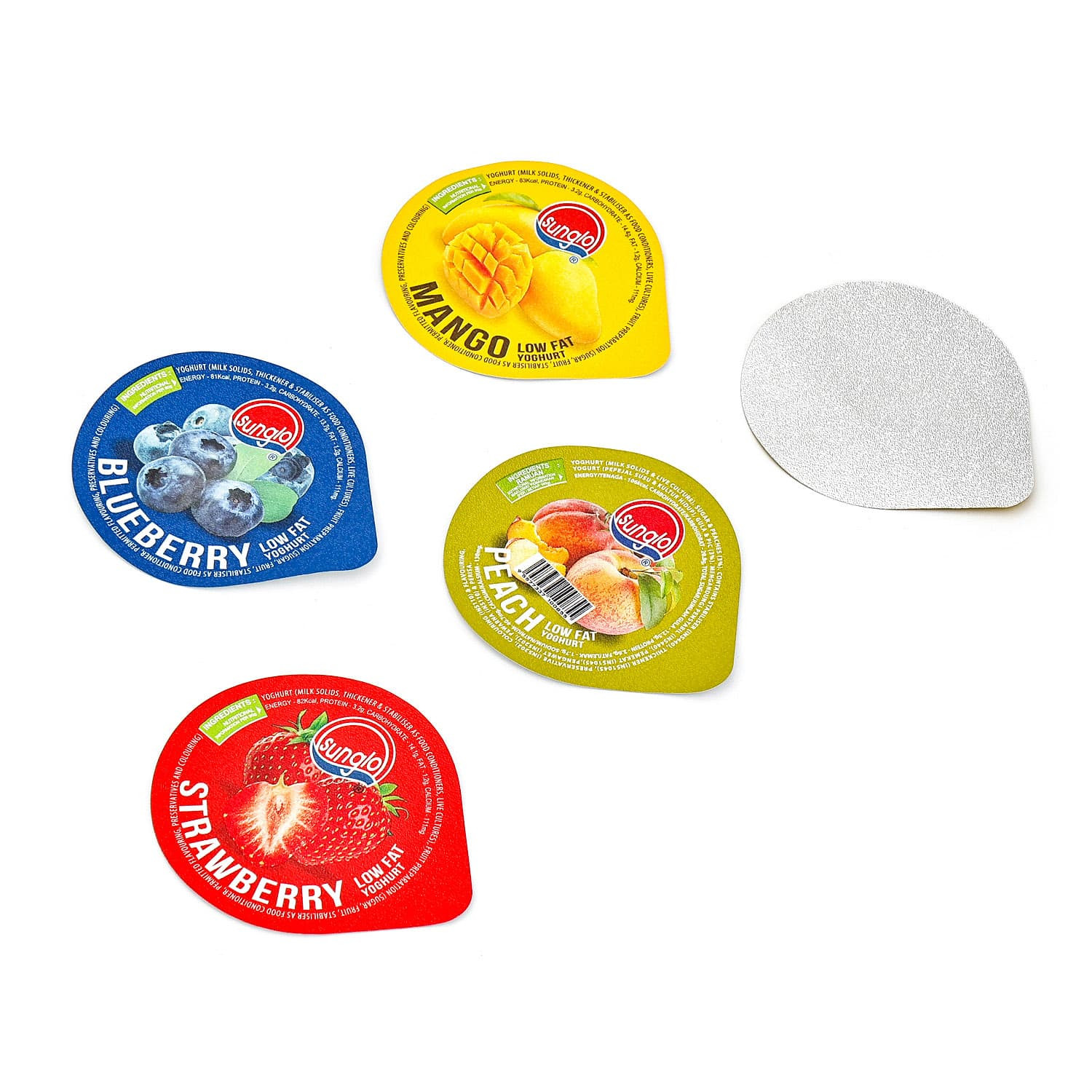
2. How to choose — based on product and scenario
Recommend 0.05mm for:
Products requiring long-term storage (e.g., milk powder, dry goods, pharmaceuticals)
Contents with hard edges or particles (e.g., nuts, broths with bones)
Long-distance transport and multiple logistics steps (e.g., export by sea)
Categories with extremely high sealing requirements (e.g., pharmaceuticals, health products)
0.02mm is sufficient for:
Short-shelf-life products (e.g., fresh milk, juice, sauces)
Soft packaging contents without sharp edges
High-speed automated production lines seeking sealing efficiency
Cost-sensitive situations needing a balance between performance and price
3. Beyond thickness — what else matters?
Thickness is just one parameter of sealing film. What truly determines sealing effectiveness also includes the adhesive layer formula, sealing temperature, bottle mouth material, cleanliness, and other factors. The same 0.02mm film matched with different adhesive layers can produce vastly different sealing results.
Therefore, it is recommended to provide information about your product contents, container material, storage environment, etc., and let the sealing film manufacturer assist in targeted matching — rather than looking at thickness alone.
Leadtra Packaging offers sealing films in multiple specifications from 0.02mm to 0.06mm, supporting custom thickness, adhesive layer, and printing. You are welcome to send samples for testing, and we’ll help you find the most suitable solution.
“Recommend”
【editor】:Leadtra PackagingCopyright:https://www.leadmenspacking.comReproduced please indicate the source