
Contact Us
- A.Yeung@leadmenspacking.com
- +8618933322747
- Building 4, No. 223, Guangcheng Road, Jiuzhouji, Xiaolan Town, Zhongshan City, Guangdong Province
Do Seal Liner Come in Different Thicknesses, and How Do You Choose?
Seal liner may seem simple, but thickness matters. Some customers ask: "Why are some liner thicker than others? Is thicker always better?" Actually, the thickness of a sealing liner should be chosen based on what you're sealing and the type of cap you're using.
Liner Thickness Is Not a One-Size-Fits-All Standard
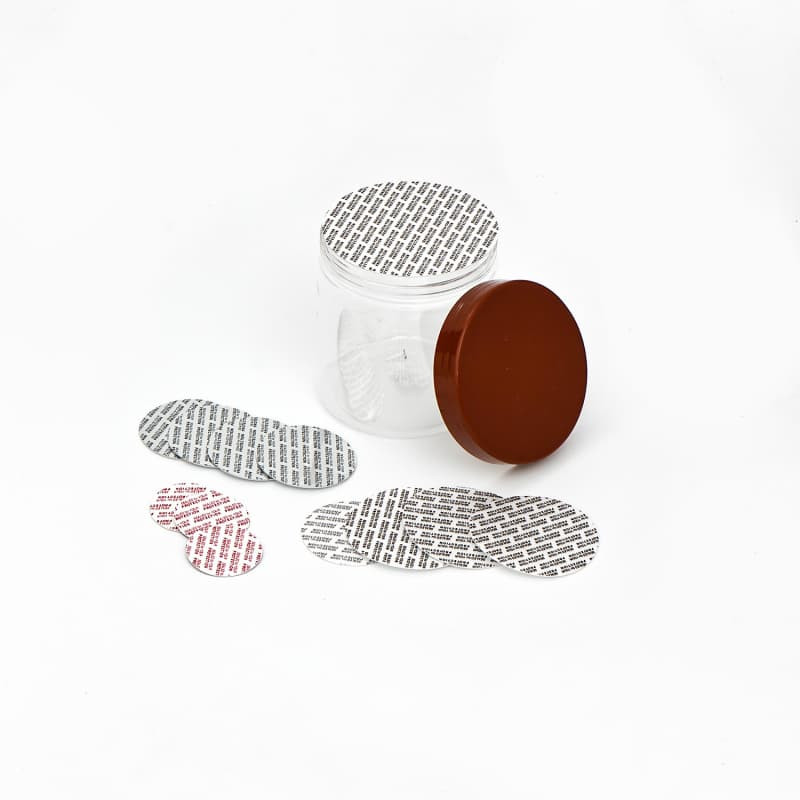
Yes, seal liner do come in different thicknesses. According to available information, the general thickness range for liner is between 0.6mm and 3.0mm, depending on the container diameter and the gap between the cap and bottle mouth. In simple terms, the larger the container diameter, the larger the tolerance of the gap, requiring a thicker liner to fill that gap; for small-diameter bottles, a thinner liner is sufficient.
Thicker Isn't Always Better
A thicker liner can provide better sealing performance in some cases — it more effectively fills irregularities between the bottle mouth and cap, offers greater compression recovery under pressure, and can compensate for minor separation of sealing surfaces during use. However, a liner that's too thick can create uneven sealing pressure, and the increased internal pressure area makes it more prone to being pushed out under high pressure. Additionally, thicker liner provide larger permeation channels, potentially increasing leak rates.
Thinner liner Also Have Advantages
If possible, thinner liner have their benefits. They make it easier to establish uniform sealing pressure, and with the same bolt force, the smaller contact area creates higher localized sealing pressure, often resulting in more stable overall sealing performance.
How to Choose? Consider These Points
Consider the bottle mouth size: For large diameters with larger gaps, a slightly thicker liner may be needed to compensate for unevenness. For small-diameter bottles, a thinner liner works fine. Generally, the liner diameter should be about 0.5mm larger than the inner diameter of the cap. Common thicknesses include 0.8mm, 1.0mm, and 1.5mm, and the final selection should be determined by the container diameter and cap gap.
Consider what you're sealing: For volatile or corrosive contents, prioritize aluminum foil liner with better sealing performance — thickness selection directly affects sealing effectiveness. For dry food or solid products, pressure-sensitive liner in the 1.0-2.0mm range are usually sufficient.
Consider the cap material and flange condition: If the cap flange is slightly uneven or shows wear, a thicker liner will better compensate for the defect. If the flange surface is smooth and flat, a thinner liner is sufficient and may provide better sealing.
Final Thoughts
Choosing the right thickness for a sealing liner isn't a guesswork decision. It should be based on bottle mouth size, product contents, and cap condition — not just blindly opting for the thickest option. If you're unsure which thickness is suitable for your product, Leadtra Packaging can assist you with sample evaluation, analysis, and matching. A good seal starts with choosing the right thickness.
“Recommend”
【editor】:Leadtra PackagingCopyright:https://www.leadmenspacking.comReproduced please indicate the source