Contact Us
- A.Yeung@leadmenspacking.com
- +8618933322747
- Building 4, No. 223, Guangcheng Road, Jiuzhouji, Xiaolan Town, Zhongshan City, Guangdong Province
Glass, Plastic, Metal — How to Choose the Right Sealing Method for Different Container Materials?
These three materials cover most packaging containers on the market. But sealing methods aren't universal — each has its own "personality," and choosing the wrong one can seriously compromise sealing effectiveness. When Leadtra Packaging works on sealing film solutions, the first thing we consider is what kind of container the customer is using.
Glass: Relying on Mechanical Force to "Lock" the Seal
Glass is rigid and doesn't deform, so sealing mainly relies on the mechanical force of the cap. The most common type is screw-on: the bottle mouth has threads, and the inside of the cap has a rubber gasket that gets compressed against the bottle mouth when tightened. This is widely used for sauce jars and canned goods — reliable seal, reusable. Another type is clinch sealing, where a can-sealing machine rolls the metal lid's edge onto the bottle mouth's flange. It offers excellent sealing but is hard to open, so it's less common these days.
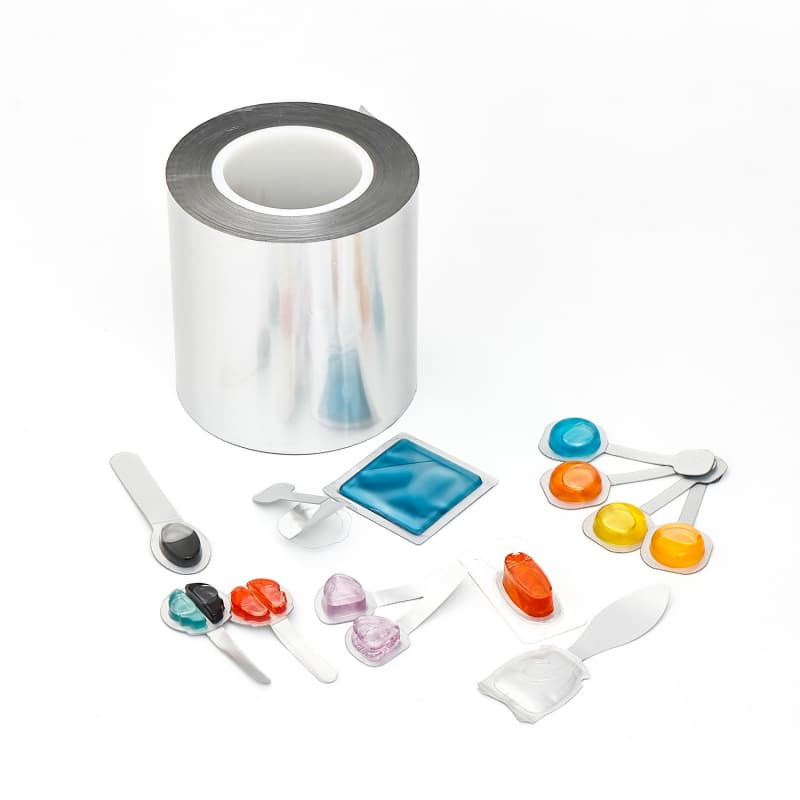
Plastic: Heat Sealing and Induction Sealing Are Mainstream
Plastic comes in many types (PE, PP, PET, etc.) and generally has lower heat resistance than glass. Heat sealing and electromagnetic induction sealing are more suitable. Heat sealing uses heat to fuse the sealing film with the plastic rim — yogurt cups and instant noodle bowls mostly use this method. Aluminum foil gasket induction sealing involves placing a gasket inside the cap, then heating it with induction equipment to fuse the aluminum foil with the bottle mouth — commonly used for pharmaceutical and supplement bottles. For tamper-evident, single-use seals, this is a popular choice.
Metal: "Rolling" for Double Protection
Metal cans have the most distinctive sealing method — not with adhesive, not with heat, but through physical deformation. The most typical is double seaming: the can-sealing machine rolls the can lid's edge together with the can body's flange, pressing them into a tight overlap. This method offers excellent sealing and is used for beverage cans, canned food, paint cans, and more.
When choosing a sealing method, start with the container material, then consider product characteristics — that's how you find the best match. If you're unsure which sealing method suits your product, Leadtra Packaging can help you select the most suitable sealing film solution based on your container material and product contents — saving you time and costs from making the wrong choice.
“Recommend”
【editor】:Leadtra PackagingCopyright:https://www.leadmenspacking.comReproduced please indicate the source