
Contact Us
- A.Yeung@leadmenspacking.com
- +8618933322747
- Building 4, No. 223, Guangcheng Road, Jiuzhouji, Xiaolan Town, Zhongshan City, Guangdong Province
Has the sealing film accidentally gotten damp?
Sometimes in the workshop, this happens: a roll of sealing film, still unopened, feels slightly damp because of high warehouse humidity or having been stored a little too long. Tossing it feels like a waste, but using it feels risky — a moment of hesitation that many production staff have probably experienced.
To know whether damp film can still be used, you first need to understand what it's vulnerable to. The sealing film's primary moisture barrier is the aluminum foil layer, which can have a water vapor transmission rate as low as 0.1 g/m²·24h·atm — like an impenetrable wall. But even the best wall can fail at the seams — the heat-seal layer (like PE) has a water vapor transmission rate dozens of times higher than aluminum foil.
The film's "seams" are usually in a few key spots:
1. Seal edges — This is the weakest link. The sealing area lacks an aluminum foil barrier and relies entirely on the heat-seal layer. If sealing temperature and pressure aren't quite right, seal strength can drop by 30%-50%, making it easy for moisture to seep in.
2. Pinhole defects — Industry standards allow a certain number of pinholes in aluminum foil (no more than 5 per square meter, diameter ≤0.3mm). In high-humidity environments, every pinhole can become an accelerated pathway for moisture penetration.
3. Paperboard or fiber layers — Many sealing gasket structures contain a paperboard layer. Once damp, the paperboard fibers may swell, shed, or even contaminate the contents.
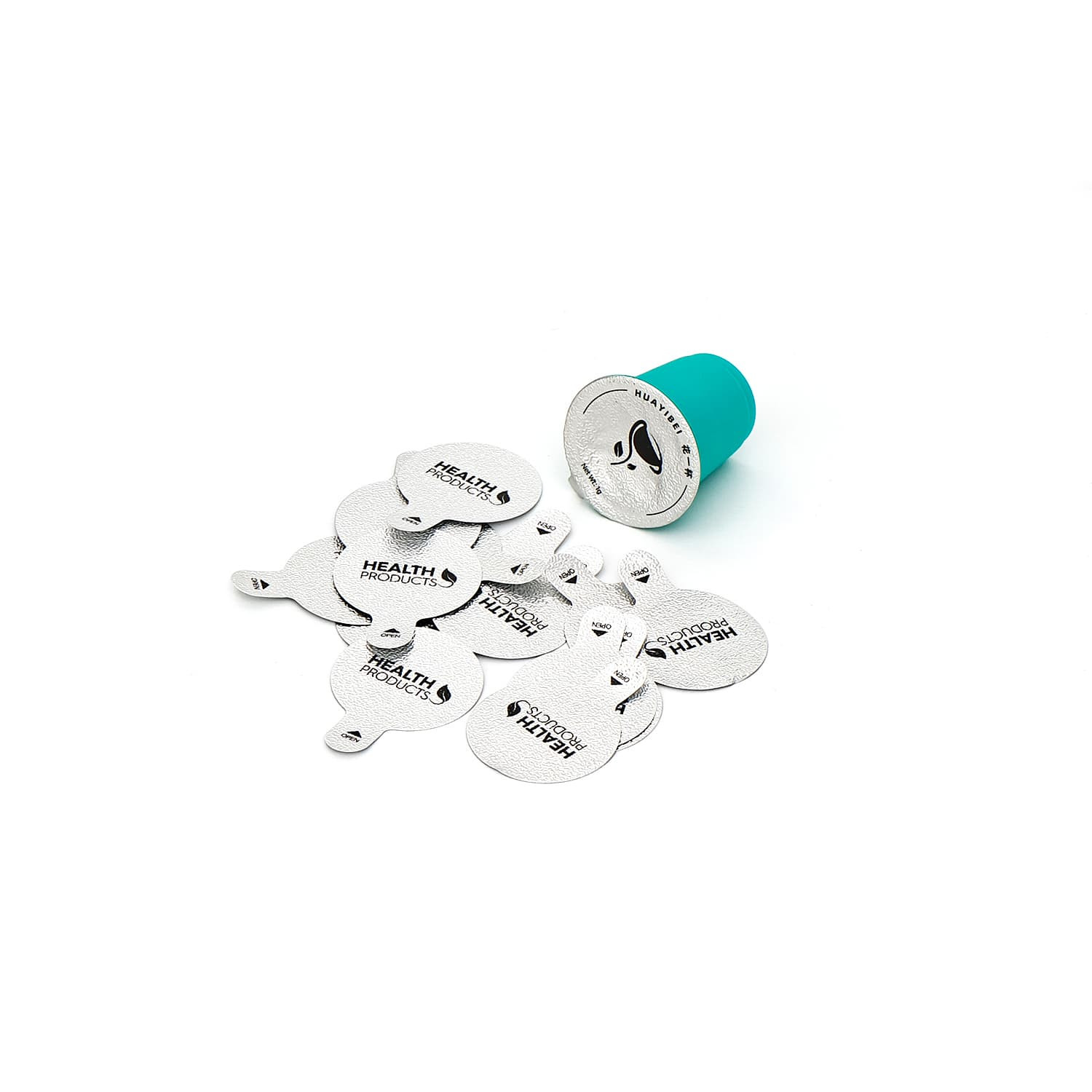
So, can damp film still be used? It depends on how damp it is.
If it's only slightly damp — the film surface shows no obvious changes, and it would dry out in a day or two in the workshop — it can most likely still be used. Take a few pieces and do a small batch test, focusing on seal integrity, whether there's any abnormality when tearing, and whether any off-odor is present. If the test seals pass, it can continue to be used.
But if the film is visibly curled, softened, has water stains on the surface, discolored aluminum foil, or even a moldy smell when you open the package — it's best to scrap it. Don't try to save on this cost.
So, moisture prevention isn't about "how to save damp film," but about "how to keep it from getting damp in the first place."
Some practical tips: open sealing film only as needed, and reseal any unused portion properly; store in a humidity-controlled environment below 60% relative humidity, with temperature between 7℃ and 38℃; let newly arrived film sit in the workshop for about 2 hours to acclimate before using it on the machine.
If you're ever unsure whether your sealing film is still usable, send a few pieces to Leadtra Packaging — we can test whether the film's performance still meets standards. That's a safer bet than either scrapping it outright or using it blindly.
“Recommend”
【editor】:Leadtra PackagingCopyright:https://www.leadmenspacking.comReproduced please indicate the source