
Contact Us
- A.Yeung@leadmenspacking.com
- +8618933322747
- Building 4, No. 223, Guangcheng Road, Jiuzhouji, Xiaolan Town, Zhongshan City, Guangdong Province
Static electricity builds up during sealing film production — how do you deal with it?
Sometimes in the workshop, you might see this: the sealing film sticks to the guide rollers as it runs through the equipment, or the edges come out uneven during rewinding. Static electricity is often the culprit.
During production, sealing film passes through many rollers — from lamination and slitting to rewinding. The constant friction, contact, and separation between the film and the rollers cause electrons to transfer, generating static electricity. Since sealing film materials are mostly insulators, the static charge has no way to dissipate and accumulates on the film surface.
So what impact does static electricity have? The most common issue is attraction — the charged film attracts dust from the air. During sealing, this dust gets trapped between the heat-seal layer and the bottle mouth, compromising the seal. Static electricity can also cause the film to misalign on the equipment and wind unevenly. In severe cases, it can interfere with the equipment's electrical systems or even ignite solvents in the workshop, creating a safety hazard. In short, if static isn't addressed, it affects quality, efficiency, and safety.
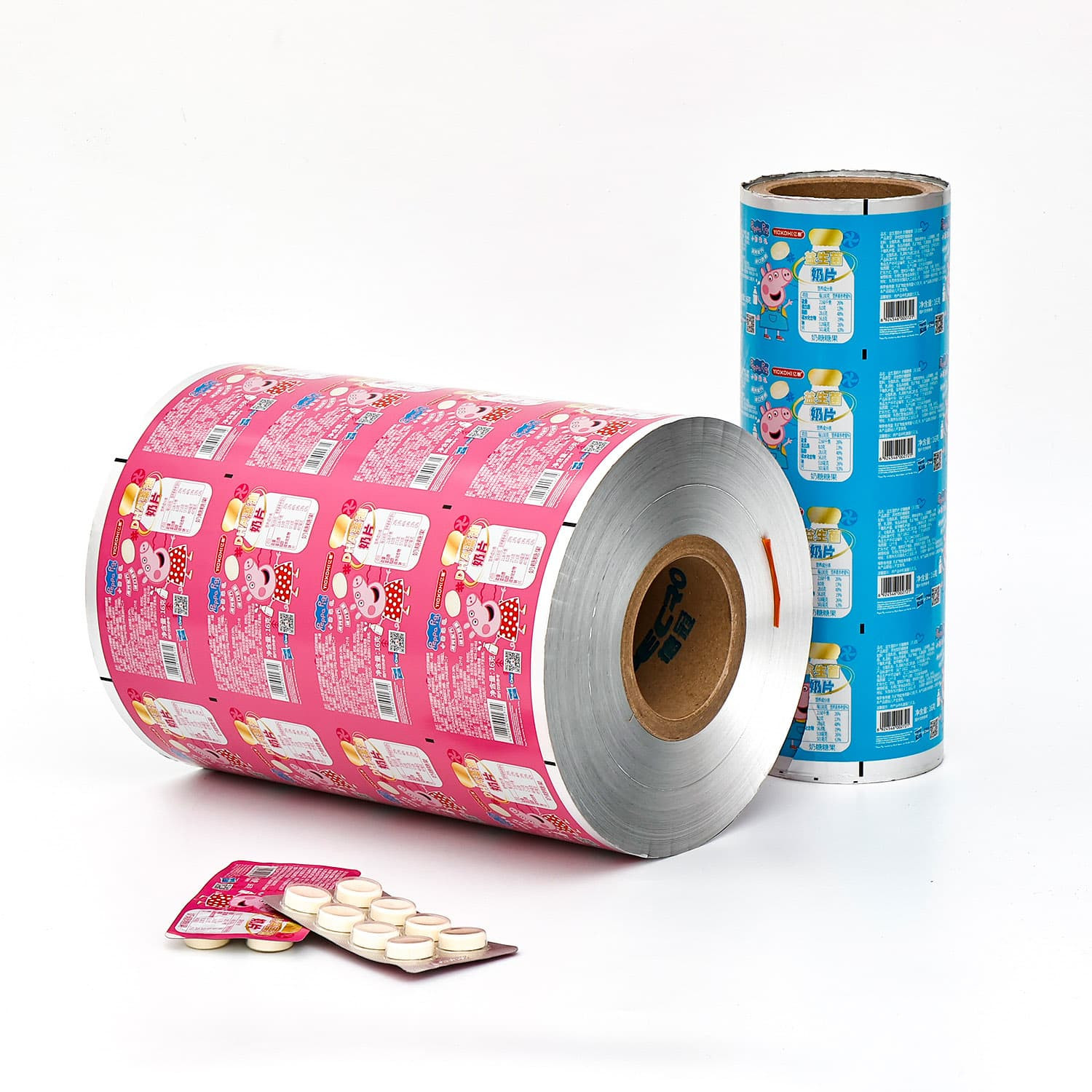
Since we know the problem, there are clear ways to solve it. The main methods are:
One approach is prevention during production. Add antistatic agents to the film material itself. These additives form a conductive layer on the film surface, allowing static to dissipate. But be careful with the dosage — too much can affect subsequent lamination and heat sealing performance, so you'll need to coordinate with your supplier.
Another approach is elimination on the equipment. The most common tools in workshops are static eliminators, such as static brushes (contact type) or ionizing blowers (non-contact type). Ionizing blowers blow ionized air onto the film surface to neutralize static. For high-speed operations or precision-demanding processes, there are also advanced high-voltage pulse static eliminators that provide precise control over residual static.
For even finer control, modern systems can achieve adaptive adjustment — the equipment adjusts ion generation intensity and airflow in real time based on workshop humidity, temperature, and film speed, keeping static at a consistently low level.
If you've encountered sealing issues caused by static electricity in your production, or if you're unsure whether your current mitigation measures are sufficient, feel free to contact Leadtra Packaging. We can provide targeted static control recommendations based on your specific film materials and processes.
“Recommend”
【editor】:Leadtra PackagingCopyright:https://www.leadmenspacking.comReproduced please indicate the source